FAST DELIVERY - LOW COST - EVERYTHING CALCULATED FOR YOU

Glass Partition Styles
Frameless Glass Partitions
The most popular and cost-effective way to divide office space. Compare styles, see what's involved, and get an instant price.
There are three main styles of glass partition. They all use the same base system — toughened glass held in aluminium channels — but the look and cost differ depending on how much framing you add. Most of our customers go for frameless because it's clean, simple and the cheapest option. But if you want better acoustics around the door or a bold industrial look, there are options for that too.
Three Styles, One System
All three styles use the same aluminium channel system and toughened glass. The difference is in the framing and the finished look.

Frameless
Lowest Cost
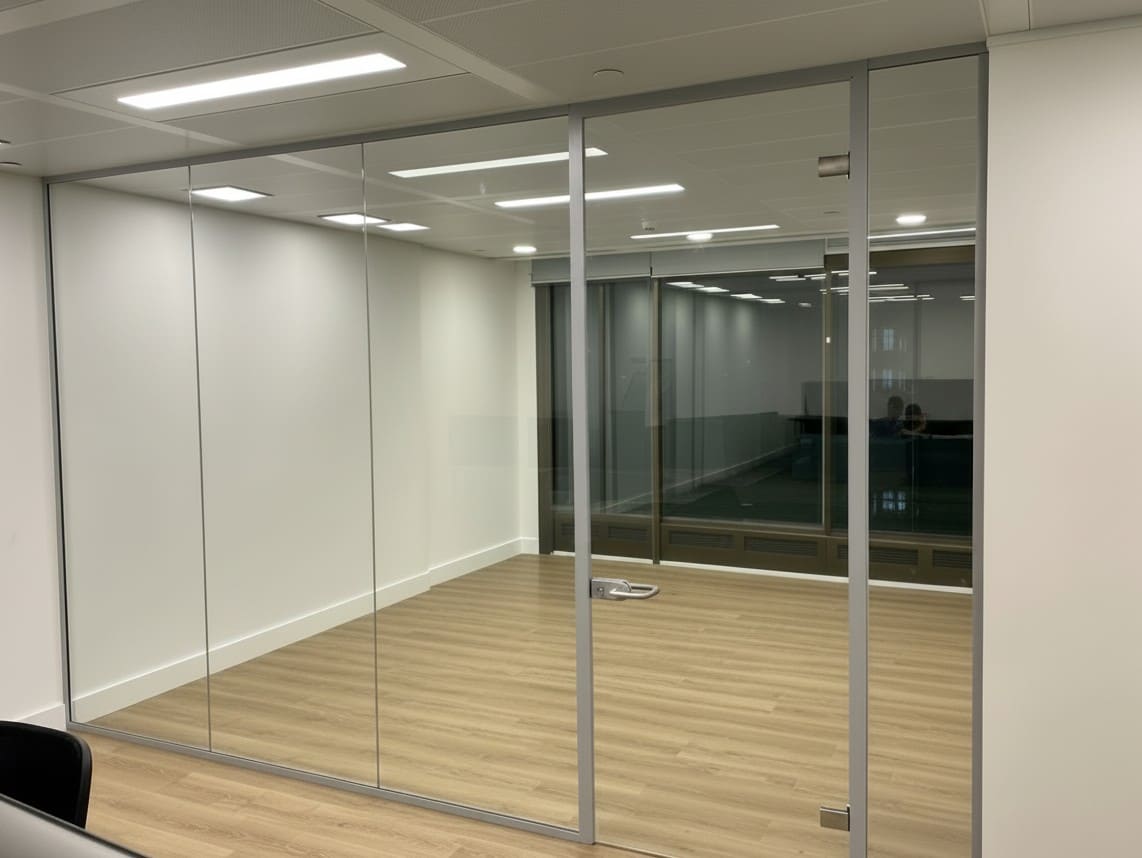
Slim aluminium channels at the ceiling, floor and walls hold the glass in place. No visible framing on the glass itself — just clean lines and maximum light. The door is a frameless pivot door on hydraulic hinges.
- Cleanest, most minimal look
- Cheapest option — fewest parts
- Channels in 4 colours, 3 sizes
- Easiest to install
Framed Door
Mid Range
The glass panels sit in frameless channels as normal, but the door opening has an aluminium frame around it — like a timber door lining. The glass door leaf is still frameless. This gives a neater perimeter around the door and a better acoustic seal.
- Better sound reduction at the door
- Neater door perimeter finish
- Door frame in 4 colours
- Glass panels still frameless
Industrial / Crittall
Premium
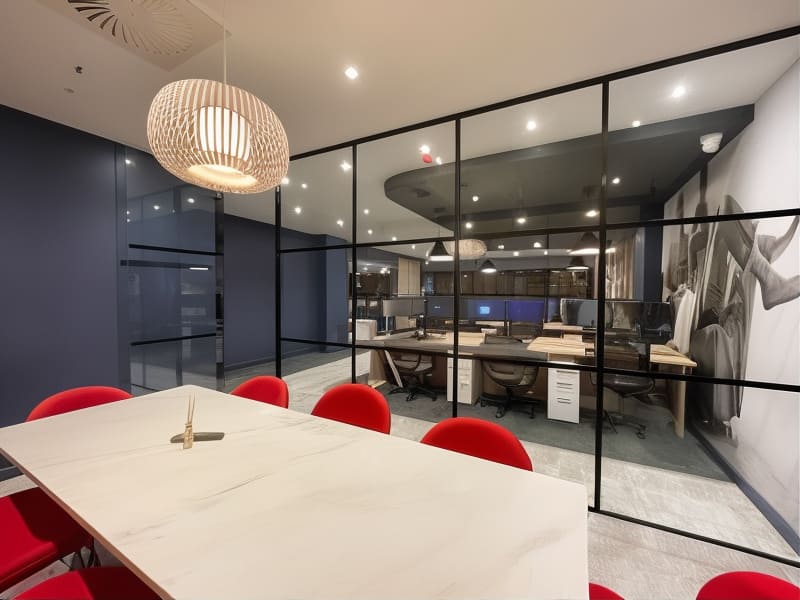
Aluminium flat bars are applied to the glass surface to create a grid pattern — the warehouse window look that's everywhere right now. Usually done in black, but available in all four channel colours. Uses the same base system underneath.
- Bold grid / warehouse look
- Usually black — all 4 colours available
- Bars applied with adhesive
- Complete design freedom on grid layout
Quick Comparison
| Frameless | Framed Door | Industrial | |
|---|---|---|---|
| Cost | £ — Lowest | ££ — Mid | £££ — Highest |
| Look | Clean, minimal | Clean with neat door frame | Bold grid pattern |
| Acoustics | Good | Better (sealed door frame) | Good |
| Door Type | Frameless pivot | Frameless leaf in aluminium frame | Frameless pivot |
| Frame Colours | Silver, black, white, anthracite | Silver, black, white, anthracite | All 4 (black most popular) |
| Glass Options | 10mm, 12mm, 12.8mm acoustic | 10mm, 12mm, 12.8mm acoustic | 10mm, 12mm, 12.8mm acoustic |
| DIY Friendly | Yes — easiest | Yes | Yes (bars need careful alignment) |
Why Most Customers Choose Frameless
Around 7 out of 10 glass partitions we sell are frameless. Here's why it works for most offices.
Fewer Parts, Lower Cost
A frameless partition uses channels, glass, gaskets and door hardware. That's it. No door frames, no flat bars, no extra adhesive. Fewer components means a lower price and a faster install. For a standard office partition with a door, frameless is typically the cheapest option by a good margin.
Works in Any Office
The minimal look of frameless glass suits everything from a startup in a converted warehouse to a solicitor's office in a period building. The slim channels almost disappear, so the partition doesn't impose a style on the room — it just divides the space while keeping all the light.
Fastest to Fit
With no door frame to align and no bars to apply, frameless is the quickest style to install. Fix the channels, slide the glass in, hang the door. A single straight partition with one door can realistically be fitted in a day by a competent tradesperson.
Easy to Modify Later
Need to change the layout? Frameless panels can be taken down and refitted relatively easily. The channels unscrew, the glass lifts out, and you can reuse most of the components in a new configuration. Try doing that with a stud wall.
When Frameless Isn't the Right Choice
You Need Better Sound at the Door
The weakest point for sound in any glass partition is around the door — that's where the gaps are. If you're partitioning off a meeting room where confidential conversations happen, a framed door partition creates a tighter seal around the door opening and noticeably reduces sound leakage. You can also upgrade to 12.8mm acoustic laminate glass for even better performance.
You Want a Design Statement
If the partition is a feature of the room — not just a practical divider — then industrial style gives you that warehouse / Crittall look that photographs well and makes an impression. It costs more, and the flat bars add time to the install, but the visual impact is significant. Popular in creative agencies, restaurants and co-working spaces.
Two Ways to Buy
Whether you want us to supply everything including the glass, or you'd rather source the glass yourself and just buy the hardware — we've got both options.
How Ordering Works
From measurements to delivery in three steps
1
Enter Your Measurements
Use our online calculator to enter your opening width and height. Choose your style, door position, glass type and colour.
2
See Your Price Instantly
The calculator shows you an itemised breakdown of every component and the total price. No waiting for quotes, no sales calls.
3
Order Online
Add to basket and check out. Complete kits with glass deliver in 7 working days. Hardware-only kits can be with you next day.
Helpful Guides
If you're planning an installation, these pages have the detail you'll need.
Choosing Your Channel Size
25mm, 30mm or 50mm — how to pick the right channel for your opening and how to calculate the right glass sizes.
Fitting Guide
Step-by-step instructions for installing a glass partition, from fixing the channels through to hanging the door.
Glass Door Fitting Guide
How to set up the hydraulic floor hinge, hang the door, and adjust the closing speed and hold-open position.
Are Glass Partitions Soundproof?
What to expect from different glass types and how to get the best sound reduction from your partition.
Common Questions
What is a frameless glass partition?
A frameless glass partition uses slim aluminium channels at the ceiling, floor and walls to hold toughened glass panels in place, with no visible frame around the glass itself. The channels come in 25mm, 30mm or 50mm sizes and in four colours — silver, black, white and anthracite. The result is a minimal, clean look where the glass appears to float. It's the most popular and cost-effective glass partition style.
What's the difference between frameless and industrial style?
Frameless partitions use slim channels to hold the glass with no visible framing on the glass surface. Industrial (Crittall-style) partitions add aluminium flat bars to the surface of the glass to create a grid or warehouse-window effect. Industrial costs more because of the additional bars and typically uses black frames, though all four colours are available. Both use the same base channel system and glass underneath.
What does 'framed door' mean? Is the whole partition framed?
No — only the door opening has a frame. The glass panels either side of the door sit in standard frameless channels as normal. The door opening gets an aluminium frame around it (like a timber door lining), and the glass door leaf hangs inside it. The door itself is still a frameless sheet of glass. The benefit is a better acoustic seal and a neater finish around the door perimeter.
Which style is cheapest?
Frameless is the cheapest because it uses the fewest components — channels, glass, gaskets and door hardware. Framed door is slightly more due to the aluminium door frame. Industrial is the most expensive because of the additional aluminium flat bars. For an exact price on any style, use our online calculator — you'll see the cost difference instantly.
Are frameless glass partitions soundproof?
They reduce noise significantly but aren't fully soundproof. Standard 10mm toughened glass handles normal office noise well. For meeting rooms where you need better acoustics, upgrade to 12.8mm acoustic laminate glass and consider the framed door style for a better seal around the door opening. See our full guide on glass partition soundproofing.
Can I fit a frameless glass partition myself?
Yes. It's straightforward for any carpenter, builder or competent DIYer. The channels fix to the ceiling, floor and walls with screws, the glass slides into place, and the door hardware bolts on. We provide a full fitting guide and phone support if you get stuck. Most single-wall partitions with a door can be fitted in a day.
Get an Instant Price for Your Partition
Enter your measurements, choose your style, and see the price immediately. No waiting for quotes.
Complete kits: 7-day delivery · Hardware only: next-day delivery · 0800 772 3992